This is my video presentation of my research on The Count of Monte Cristo. I distributed this among my social network by posting it publicly on YouTube and sending links to the video to my peers via Facebook and Email.

Showing posts with label posted by Jessica. Show all posts
Showing posts with label posted by Jessica. Show all posts
Monday, April 21, 2014

Tuesday, April 15, 2014
Help Wanted--From One Desperate Student to Another
 |
| Creative Commons / Jayel Aheram |
Okay, so I know all of you are probably just like me. Completely swamped, busy with finals, and have plenty of things to do. But I am still writing my research paper, and would appreciate any help that anyone is willing to give me.
I am trying to figure out how to form a cohesive thesis statement. I'm not quite sure how to make this a "research" paper rather than just a typical literary analysis. What I would like to do is talk about one of the following:
1. That Education is tied directly to agency. This manifests itself in The Count of Monte Cristo with the Abbe Faria, who helps Dantes figure out why he was imprisoned, and then gives him the knowledge he needed to be whatever he wanted. When Dantes escaped from prison, because of what Faria gave him in education (not just the treasure), he was able to start completely anew.
Monday, March 31, 2014
To Do Lists Are My Favorite
TO DO:
-Re-read book and relax
-Annotate Sources
-Read Former Analyses
 |
| Creative Commons License BY-ND / Mufidah Kassalias |
The main thing on my to do list, however, in terms of my paper would be to digest the sources I have. I actually have most of the sources that I need, and I may need to do more research, but the sources I have are varied enough to help me make the connections I need. What I really need to do is go through my sources and annotate them.
Another thing I have to do is read my former papers. I want to go through the literary analyses I wrote earlier this semester and make sure to incorporate the things I didwell as well as improve upon the things I did not do as well on in my last papers.
Friday, March 28, 2014
Harry Potter and the Pedagogy of Teaching
I attended the English Symposium performance of "Teaching Harry Potter." It was a really interesting symposium presentation about how education is taught through young adult literature. They go through different examples throughout the books of how education is approached at Hogwarts. I just loved this presentation especially because of the subject matter. It was fascinating to learn how learning and education values are presented in the Harry Potter books.
 |
| Creative Commons License 3.0 / Wikimedia |

Wednesday, March 26, 2014
Is Anyone Listening?
I am feeling a little bit in line with Richard right now, in that when I wasn't looking for it, finding social proof for my work and research was easy. Finding enthusiasts for the things I am interested in came to me more often than not. But the second I begin to search for it, it's like I jinxed myself and all of the sudden NO ONE has any professed interest into what I am looking into.
Despite reaching out, I've received quite minimal feedback on my topic. I've posted on Facebook, Goodreads, this blog, and I've reached out to specific friends who might be interested. Nothing. So I'm going to try again, and this time I'm going to take a different approach now. Who is interested in Greek mythology? Zeus sleeping with women, Hera and all her revenge schemes, the battle of Troy, the voyage of Aeneas, love stories, people changing into trees and ponds and cows, anyone? Ancient Greece and Rome had one thing going for them for sure (probably many things, but this one in particular). They know how to tell a story. The ancient myths of Greece and Rome are fascinating. I am looking for anyone who would be interested in that. That is what I am researching. Allusions to these myths are all over the place in our culture today. I could peronsally point out 15 of them in the first Harry Potter book alone. They are in literature, they are in televsion, they are in movies, they are in the very words that we use, they are in the basis of our language, they are everywhere. I need to find people who would be interested in that. I'm going to stop asking people to talk to me about The Count of Monte Cristo, because I've gotten nowhere with that.
Who likes ancient Greek and Roman mythology? Who wishes they could go to Italy and see the ancient temples, the beautiful architecture, the statue of Michelangelo? I need people like you to listen to me, because even if you have never read the novel I am researching, I promise you will be interested.

Despite reaching out, I've received quite minimal feedback on my topic. I've posted on Facebook, Goodreads, this blog, and I've reached out to specific friends who might be interested. Nothing. So I'm going to try again, and this time I'm going to take a different approach now. Who is interested in Greek mythology? Zeus sleeping with women, Hera and all her revenge schemes, the battle of Troy, the voyage of Aeneas, love stories, people changing into trees and ponds and cows, anyone? Ancient Greece and Rome had one thing going for them for sure (probably many things, but this one in particular). They know how to tell a story. The ancient myths of Greece and Rome are fascinating. I am looking for anyone who would be interested in that. That is what I am researching. Allusions to these myths are all over the place in our culture today. I could peronsally point out 15 of them in the first Harry Potter book alone. They are in literature, they are in televsion, they are in movies, they are in the very words that we use, they are in the basis of our language, they are everywhere. I need to find people who would be interested in that. I'm going to stop asking people to talk to me about The Count of Monte Cristo, because I've gotten nowhere with that.
Who likes ancient Greek and Roman mythology? Who wishes they could go to Italy and see the ancient temples, the beautiful architecture, the statue of Michelangelo? I need people like you to listen to me, because even if you have never read the novel I am researching, I promise you will be interested.
Monday, March 24, 2014
The Revelation in Research
So while I was researching my topic, I stumbled upon a review articles entitled, "Death, Resurrection, and Fall in Dumas' Comte de Monte-Cristo." I began researching Christ figures in The Count of Monte Cristo, hoping to find something to tie in with Abbe Faria and get me going on further research. When I found this gem, it opened up a new door for my topic, which I am so excited about!!!

Alexandre Dumas' The Count of Monte Cristo is a complex novel with many themes in it. Dumas uses biblical and mythical allusions to add a religious context to the novel and add depth and meaning to the characters. Dumas was well-versed in Greek and Roman mythology, and he first learned to read with the Holy Bible. Throughout the course of the novel, Dumas alludes to Greek and Roman myths, Christ, and biblical stories. These allusions add depth to his characters and a profound religious meaning to his novel.
Severson, Marilyn. Masterpieces of French Literature. Westport, CT: Greenwood, 2004. Print.
This source gives a summary and brief analysis of The Count of Monte Cristo. Marilyn Severson looks at plot development, character analysis, narration, and many other things. What I found to be the most useful in this was the character analysis, particularly with Edmond Dantes/the Count of Monte Cristo. Her analysis points out how the count lost his humanity by becoming so obsessed, and later regrets that he thought himself God's equal. This would be helpful for me in looking at Christ figures in The Count of Monte Cristo as well as looking at whether or not the Count was actually an agent of Providence or not.
Marinetti, Amelita. "Death, Resurrection, and Fall in Dumas' Comte de Monte-Cristo." French Review. Vol. 50, No. 2, pp. 260-269. Web.
This source inspired my new research topic! It talks about Dumas' biblical and mythological allusions in The Count of Monte Cristo, pointing out significant instances and talking about how they connect to ancient ideals. Absolutely perfect!
The Holy Bible, King James Edition London, 1611
This is a source I will use when citing the biblical allusions that Dumas' makes. Useful, helpful and necessary.
Stoneman, Richard. Greek mythology: an encyclopedia of myth and legend. London: 1991.
I will use several of the entries in this encyclopedia to reference the Greek and Roman mythological allusions in The Count of Monte Cristo.
What's next on my to do list is to start compiling instances of these allusions within the story. I'll need to spend some time in the library refreshing my knowledge of Greek and Roman mythology, and then I will need to start looking at biblical allusions in Lewis Carroll's Alice works.
Alexandre Dumas' The Count of Monte Cristo is a complex novel with many themes in it. Dumas uses biblical and mythical allusions to add a religious context to the novel and add depth and meaning to the characters. Dumas was well-versed in Greek and Roman mythology, and he first learned to read with the Holy Bible. Throughout the course of the novel, Dumas alludes to Greek and Roman myths, Christ, and biblical stories. These allusions add depth to his characters and a profound religious meaning to his novel.
Severson, Marilyn. Masterpieces of French Literature. Westport, CT: Greenwood, 2004. Print.
This source gives a summary and brief analysis of The Count of Monte Cristo. Marilyn Severson looks at plot development, character analysis, narration, and many other things. What I found to be the most useful in this was the character analysis, particularly with Edmond Dantes/the Count of Monte Cristo. Her analysis points out how the count lost his humanity by becoming so obsessed, and later regrets that he thought himself God's equal. This would be helpful for me in looking at Christ figures in The Count of Monte Cristo as well as looking at whether or not the Count was actually an agent of Providence or not.
Marinetti, Amelita. "Death, Resurrection, and Fall in Dumas' Comte de Monte-Cristo." French Review. Vol. 50, No. 2, pp. 260-269. Web.
This source inspired my new research topic! It talks about Dumas' biblical and mythological allusions in The Count of Monte Cristo, pointing out significant instances and talking about how they connect to ancient ideals. Absolutely perfect!
The Holy Bible, King James Edition London, 1611
This is a source I will use when citing the biblical allusions that Dumas' makes. Useful, helpful and necessary.
Stoneman, Richard. Greek mythology: an encyclopedia of myth and legend. London: 1991.
I will use several of the entries in this encyclopedia to reference the Greek and Roman mythological allusions in The Count of Monte Cristo.
What's next on my to do list is to start compiling instances of these allusions within the story. I'll need to spend some time in the library refreshing my knowledge of Greek and Roman mythology, and then I will need to start looking at biblical allusions in Lewis Carroll's Alice works.
Friday, March 14, 2014
SOS! Tweethis Going Under!
Okay, so I need some serious help! I have been thinking about The Count of Monte Cristo and what
 my options are in terms of research. I have hit a lot of dead ends, and I need some feedback. Don't worry, I haven't quite abandoned ship yet, but I would really appreciate any ideas on how I can save this.
Last night, in the midst of my frustration, my darling fiancé talked with me and basically had me tell him the entire story of The Count of Monte Cristo and why I liked it. Then we had a pretend argument about whether or not the Count was justified in what he did.
 We talked about the Abbe Faria as being a Christ figure, because his death brings about Edmond's escape, his new life in a sense. And it is through the Abbe Faria's teaching, treasure, and death that Edmond Dantes dies and The Count of Monte Cristo is born. But that begs the question, does Edmond/The Count represent us? Are we all born good, like the original Edmond, and then we choose evil and become corrupted by circumstance? Or perhaps Dumas is trying to illustrate agency misused?
Edmond Dantes is inherently good. I think everyone could agree on that. He is good and kind and loves deeply. But is the Count of Monte Cristo good? Some may argue yes, because he does many "good" things, but are they really good? It seems to me that everything he did was for revenge, even the good things. Even his merciful acts are used to manipulate, and he essentially takes upon himself the role of God. Then, finally, when all of it is over, what does he have left?
I think the real question at the end of the book is Is the Count happy? I would say no. He has spent too much of his life and energy directed towards revenge and bitterness, claiming it was the "justice of God," but all along hardening himself to it. In the end, he keeps his name, The Count of Monte Cristo, effectively proving that Edmond Dantes has died. When the revenge is complete, he has nothing but emptiness.
This is my argument, and I would like to turn it into a research paper. Tell me what you think before the ship goes down!
Last night, in the midst of my frustration, my darling fiancé talked with me and basically had me tell him the entire story of The Count of Monte Cristo and why I liked it. Then we had a pretend argument about whether or not the Count was justified in what he did.
Edmond Dantes is inherently good. I think everyone could agree on that. He is good and kind and loves deeply. But is the Count of Monte Cristo good? Some may argue yes, because he does many "good" things, but are they really good? It seems to me that everything he did was for revenge, even the good things. Even his merciful acts are used to manipulate, and he essentially takes upon himself the role of God. Then, finally, when all of it is over, what does he have left?
I think the real question at the end of the book is Is the Count happy? I would say no. He has spent too much of his life and energy directed towards revenge and bitterness, claiming it was the "justice of God," but all along hardening himself to it. In the end, he keeps his name, The Count of Monte Cristo, effectively proving that Edmond Dantes has died. When the revenge is complete, he has nothing but emptiness.
This is my argument, and I would like to turn it into a research paper. Tell me what you think before the ship goes down!
Thursday, March 13, 2014
Hatred is Blind
The Count of Monte Cristo is my absolute favorite novel of all time. Just about every theme you could possibly think of is found in that book. I am having a difficult time trying to figure out what I would like to research with this novel, but right now I am aiming towards looking at the religious and possibly the political side of the novel. Particularly with the morals that are presented in this novel.
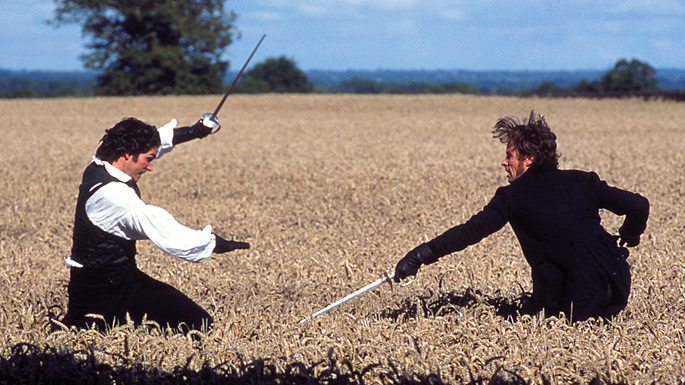 Nothing says it better than this:
"Fool that I am...that I did not tear out my heart the day I resolved to revenge myself."
The Count of Monte Cristo features a man who gives way to bitterness and hatred, holds the greatest grudge ever known to mankind, and eventually loses himself in revenge. Everything he was before, all of his innocence is now gone, not necessarily because of his misfortune, but because he chose to give it all up and become someone else--he chose to be hateful.
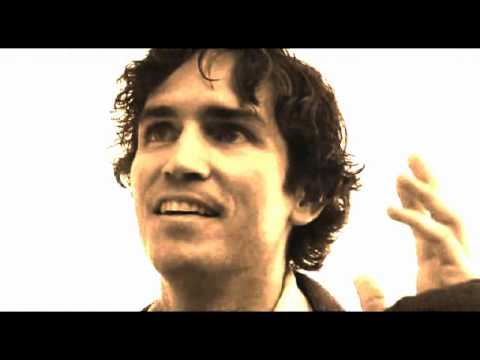

"Hatred is blind; rage carries you away; and he who pours out vengeance runs the risk of tasting a bitter draught."
This proves to be painfully true for the man who was once Edmond Dantes. In his bitterness, in his insistence to hold a grudge and get revenge on those who wronged him, he loses himself. He acts the part of God, doling out mercy and justice as he sees fit. He loses his chance at the happiness that was once available to him.
Nothing says it better than this:"Fool that I am...that I did not tear out my heart the day I resolved to revenge myself."
The Count of Monte Cristo features a man who gives way to bitterness and hatred, holds the greatest grudge ever known to mankind, and eventually loses himself in revenge. Everything he was before, all of his innocence is now gone, not necessarily because of his misfortune, but because he chose to give it all up and become someone else--he chose to be hateful.
"Hatred is blind; rage carries you away; and he who pours out vengeance runs the risk of tasting a bitter draught."
This proves to be painfully true for the man who was once Edmond Dantes. In his bitterness, in his insistence to hold a grudge and get revenge on those who wronged him, he loses himself. He acts the part of God, doling out mercy and justice as he sees fit. He loses his chance at the happiness that was once available to him.
Monday, March 10, 2014
Self Projections All Over
While I have been researching The Count of Monte Cristo, I have been troubled by making a connection to Lewis Carroll. However, today as I was sitting in the library reading a book referenced by Annalee Norton, I found something awesome! I found out that Alexandre Dumas' character, Edmond Dantes, is very much a reflection of Dumas himself. Many of the sentiments and even direct phrases quoted by "The Count" are reflected in Dumas' memoirs of his father, General Alex Dumas. These connections were inspiring to me because in my very last analysis paper on Carroll, I evaluated Alice as a projection of Charles Dodgson, rather than Alice Liddell, as is commonly believed.
Therefore, here is my working thesis:
Alexandre Dumas' The Count of Monte Cristo is a complex novel about one Edmond Dantes, who after being unjustly imprisoned, breaks free and enacts revenge on those who were responsible for his imprisonment. Historical, biographical, and textual evidence indicate that Dantes is a reflection of Dumas himself, with similar characteristics and sentiments that are reflected in Dumas' memoir of his father. In essence, Edmond Dantes is a self-projection of his own creator.
Learning for Life
When I was 18-years old, I attended Carlbrook School, a boarding school in Southern Virginia whose motto is "Non Scholae Sed Vitae Discimus," which in latin for "Not for School, but for life we learn."
Carlbrook had an amazing impact on my life because of the people I was able to meet there. That school in the middle of nowhere Virginia gave me the amazing opportunity to meet and interact with students, professors, counselors and staff members that form some of the brightest, most brilliant people I have ever known.
I had a professor who taught Latin and Ancient Greek Literature who inspired my passion for ancient studies and language. Because of this professor, I have pursued the study of Italian and have developed a deep love for the study of ancient Greece and Rome. Professor Quay has continued to influence me in my studies, and just last semester when I did a presentation on Ancient Rome, I emailed him and got some wonderful ideas and feedback on my presentation.
 I had another music and dance teacher there who inspired my love ballroom dance. My dear friend, Gavin Rice, graciously agreed to be my dance partner and suffered through the learning curve I was on. We spent two semesters learning how to twirl and waltz and express emotion through movement.
Ms. Liaschenko also directed the school play. She coached me through vocal lessons and I even got to play some violin for the play. It was an amazing experience I will never forget.
Carlbrook had an amazing impact on my life because of the people I was able to meet there. That school in the middle of nowhere Virginia gave me the amazing opportunity to meet and interact with students, professors, counselors and staff members that form some of the brightest, most brilliant people I have ever known.
I had a professor who taught Latin and Ancient Greek Literature who inspired my passion for ancient studies and language. Because of this professor, I have pursued the study of Italian and have developed a deep love for the study of ancient Greece and Rome. Professor Quay has continued to influence me in my studies, and just last semester when I did a presentation on Ancient Rome, I emailed him and got some wonderful ideas and feedback on my presentation.
I had another music and dance teacher there who inspired my love ballroom dance. My dear friend, Gavin Rice, graciously agreed to be my dance partner and suffered through the learning curve I was on. We spent two semesters learning how to twirl and waltz and express emotion through movement.Ms. Liaschenko also directed the school play. She coached me through vocal lessons and I even got to play some violin for the play. It was an amazing experience I will never forget.
Subscribe to:
Posts (Atom)