Showing posts with label Research Process. Show all posts

Tuesday, April 15, 2014

How to enjoy writing an academic paper:

The journey to my finished product has been long and not without turbulence. Yet here I am, with a literary analysis paper behind me and I really enjoyed creating it. Here is a little bit about my process and what I have learned from interaction based research.

In the first post I wrote on this literary research blog, I summarized the novel Ella Enchanted by Gail Carson Levine. Annalee was the first to comment about how there are several feminist aspects in the novel that I could relate to Alice in Wonderland. I shared it with my Facebook friends and got a lot of people interested in the paper I was beginning to construct. Even though I was trying to avoid feminism, I took Annalee's repeated advice to incorporate feminist tones and it led me to my finished product. Until I was convinced, my first working thesis (or tweethis statement) dealt with control more than the role of women in literature. Sophie suggested I use more formal analysis and bring the author into the paper more, which was great since formal analysis is a weakness of mine. Annalee commented as well and expressed that there was still not a real "so what" in my argument. The only way to rectify this was to finally let feminism in and start talking about men and women as well as control. 

As I circulated my ideas to my friends on Facebook, I asked some general questions to get a conversation flowing. I asked what people thought about the book Ella Enchanted and was linked to some helpful websites. I also asked what people thought about feminism in Young Adult Literature. Later, I was able to get some helpful opinions about the definition of beauty. In a comment on my new post, Kate confirmed that what Annalee had been telling me for several posts now was true. I needed to address the feminism in Ella Enchanted.

Wednesday, April 2, 2014

Through the Library

Since we didn't have class today (Wednesday), I spent some time in the library looking up articles and books that might be helpful sources to use for my paper. Using various combinations of "Ayn Rand," "Anthem," "Lewis Carroll," "language," "linguistics," "thought," and "control" (some general searches, others combined more specifically), I found a few sources that I may or may not use directly in my paper, but either way could be helpful:
Major levels of  linguistics / Wikipedia
  • an article about Rand's promotion of narcissism and worship of "This god, this one word: I" (which also slams Donald Trump as a politician)
  • a brief abstract of a graphic adaptation of Anthem, made in response to a letter that Ayn Rand wrote to Walt Disney requesting that if Anthem were to be made into a film, she would like it to be represented with stylized drawings rather than live actors (so the graphic novel version apparently features stylized drawings)
  • a book called Language and Lewis Carroll which sounds very relevant to my argument
  • an article that puts Lewis Carroll's use of linguistics into the context of Victorian language theory--the idea of "autonomous language" wherein words have a life outside of the speaker, which actually sounds really interesting
  • an article examining the historical origins of language and speech itself (maybe relevant?)
  • a more science-y article about how automatic language processing is, focusing on neurological processes (probably not terribly relevant to my paper but still interesting)
  • and another science-y article about whether or not thought is dependent on language (which actually should be very relevant to my paper)...

Monday, March 31, 2014

To Do Lists Are My Favorite

TO DO:
-Re-read book and relax
-Annotate Sources
-Read Former Analyses
Creative Commons License BY-ND / Mufidah Kassalias

For my paper right now, I need to spend some time reading my book a little closer. Specifically, I need to go to specific sections of my book that I am considering using and read those sections from a more analytical standpoint. And I don't know if I need to just read my book for fun, but it would be therapeutic and relaxing for me to do so, and it  might also contribute to my paper.

The main thing on my to do list, however, in terms of my paper would be to digest the sources I have. I actually have most of the sources that I need, and I may need to do more research, but the sources I have are varied enough to help me make the connections I need. What I really need to do is go through my sources and annotate them. 

Another thing I have to do is read my former papers. I want to go through the literary analyses I wrote earlier this semester and make sure to incorporate the things I didwell as well as improve upon the things I did not do as well on in my last papers. 

Go for the goals.

CC-BY-SA-3.0,2.5,2.0,1.0
There comes a time, when writing a literary analysis paper, when one must stop and appreciate the progress that has been made, as well as assess what still needs to be done. I have a pretty good handle on what I would like to address in the novel Ella Enchanted by Gail Carson Levine, but now that I have included Fairest (by the same author) in my paper, I feel the need to do some close reading with it. I have only read Fairest once all the way through and so I think I need to take some time to really study it in context of my topic. Also, I think I have several sources that aren't as relevant any more now that I have shifted the direction of my topic. I'd like to replace some of those with fresh sources that are more applicable.

My goals for the rest of this week:
  • Complete a close-reading of Fairest by Gail Carson Levine.
  • Look again at the sources I have now and incorporate them into my working paper.
  • Find which sources that I have already complied aren't working for me with my revised thesis, and replace them with new ones.
  • Organize the ordering and structure of my paper in preparation for Friday's half-draft.

Tuesday, March 25, 2014

Snow White and the Seven New Sources

hakirah.org
In writing my literary analysis paper on fairy tales and feminism, my focus has shifted to include more of the novel Fairest as well as Ella Enchanted. Fairest is a retelling of Snow White by the same author: Gail Carson Levine. As I have been reading Fairest, I have become convinced that I need to write about it along with Ella Enchanted.

Here's an updated thesis:

The novels Ella Enchanted and Fairest are both fairy tale adaptations written by Gail Carson Levine. The young female protagonists, Ella and Aza, teach opposite lessons than the fairy tales they are retelling, redefining a woman’s beauty, success, and happiness as a result of hard work, wit, and determination rather than the effect of external actions, people, and circumstances.


As I was trying to research, I felt like I had already exhausted my efforts to find new sources. That is before I had a wonderful chat with a BYU librarian at 11:30pm. I couldn't believe it. My husband was amazed that there was someone willing to help me so late at night. I'm telling you guys, talk to the librarians if you haven't already done so. It was so helpful. I was led to these a source that helped me uncover all of these new sources below (and more).

The Game is On!

My research day was productive, but also frustrating. I am earnestly looking for a Count of Monte Cristo Concordance and a good Encyclopedia about France in English not French. While I am still on the hunt for these, I did find a couple other texts that do talk about the religious and social atmosphere in the 19th century in France, which is wonderful. Anyways, so here is my working thesis (I’m still wondering if I have too much going on):

Creative Commons License 2.0/Super Furry Librarian
In the 19th century, scientific discoveries and new social constructs caused a surge of existential confusion. It led to doubts and questions about the power of an individual in relation to society and God. These questions echo in Alexandre Dumas’ The Count of Monte Cristo and in Carroll’s Alice’s Adventures in Wonderland in their similar battle for individual control and meaning over society and God. Edmond Dantes claims to be acting in the stead of Providence throughout much of his journey in The Count of Monte Cristo, but his tirade of vengeance and refusal to connect with society result in the gradual displacement of God, and the substitution of himself in the role of justice. Similarly, the Queen of Hearts displaces Alice, the dreamer of Wonderland, as an authority figure and also distances herself to rule over society. Ultimately, the restoration of the rightful ruling power in both texts presents the futility of man in creating their own existential meaning independent of an established outside center. 

Monday, March 24, 2014

A New Thesis and More Sources

And to think I wasn't going to go to class last Friday.
Public Domain/Wikimedia Commons

I am so glad I did, for we paired up and I was able to bounce ideas off of my classmate, Morgan. She helped me find a new, better way to approach my ideas and research. Shameless shout-out, I know. 

Anyways, I have altered my thesis for the better. Here is my working first paragraph:

An author writes to the best of his ability, to portray what he imagines. Therefore, when an author uses visual aids, such as illustrations or motion picture, he is exerting control over the reader's ability to imagine differently. Lewis Carroll was very particular about the illustrations in his Alice works because he wanted them to portray his view of Wonderland. Similarly, William Goldman, after writing the novel The Princess Bride, also wrote the screenplay in order to make sure his ideas were portrayed in the way that he originally meant them to be. The relationship between an author and a reader is one of trust, but when an author uses other mediums to aide his text, he is infringing on the imagination of the reader.


I have done some extra research on these ideas. I even used the "instant library chat" thingy for the BYU library. It worked really well. The librarian was able to lead me to a source that had a bibliography at the end with lots of other helpful sources. 

This was my short, yet helpful conversation with a librarian over chat. 

The annotated bibliography follows:

Wednesday, March 19, 2014

Welcome to the Real World.

Logo from goodreads.com
I have been on Goodreads exploring different reviews that members have written about the YA novel Ella Enchanted by Gail Carson Levine. I stumbled upon an extensive review with a link to a whole article on feminism in Ella Enchanted. I was pretty excited, because it relates really well to the ideas I have been exploring for my literary analysis paper. I messaged the author of the article (a college student from Pace University) to thank her for her helpful article and asked her if she had any thoughts about feminism in Young Adult Literature specifically in fairy tales. She responded to me in literally 20 minutes:

"Hi Tori! Thanks for getting in touch. It's so nice to know people still find that review on here and actually read the article..."

She went on to give me links to several more articles and her thoughts about my topic. Wow. That was so helpful and it happened so fast. Plus, it was so easy. People really do wan
t to talk to me about my little paper! I was blown away by her eagerness.

I also have an old Facebook group from a class last fall semester and we have kept it going this semester even though we are all in different classes now. I don't know the people very well, all I know is that that are a little bit nerdy and have a lot of great thoughts about my ideas. This Facebook group I have quite honestly ignored for the past few months has become a great resource. 

I have also been looking for ways I can get my paper out to people who might care about reading it after I finish writing it. I had no idea that there were so many ways to publish undergrad essays online! I am very grateful for this informative blog post about how to find authentic audiences for my work, even while I am still a student. It has been very motivating.

BYUlogo.png
First of all, I am definitely going to submit my work to the BYU repository called the ScholarsArchive because it accepts any kind of student research. It would be a cool place to be published since I am attending school at BYU and I'd feel like I was leaving my mark here. 

I would also love to submit to the International Student Journal because I love the variety of topics and the range of research that they accept. People from all over the world can submit to this journal. I think my paper about YA literature, feminism, and gender roles will find a home there.

This blog: Interesting Literature is calling for any papers on literary analysis which is exactly the kind of paper I'm working on right now. This is one of my favorite options becuase I feel like guest blogging is more low-key. I feel pressure to write something worth reading, but I am not overwhelmed by the formal elements of a journal submission.

Chris on Flickr: shutterhacks
This blog: PURM is more geared toward bloggers who want to discuss the process of undergrad research. This isn't one that I could submit my paper to but it is something that is beginning to interest me. It makes so much sense for us to be looking for authentic audiences now while I am a student, and yet, I have never done it before. Why haven't I? I've decided it comes down to two things: fear and ignorance. I'm afraid of an authentic audience and I haven't bothered to learn how to find them. It's much more comfortable to settle for a contrived audience.

But no more. 

Real life is beginning. Undergrad researchers of the universe, are you with me?!

Monday, March 17, 2014

Regaining Composure

Things are getting out of control.

There is way too much going on in my brain. There was more going on than I even realized. Mapping it out was so simple, but so helpful for me because I didn't realize how separate some of my ideas were. I know that I need to eliminate the thoughts that aren't helping my ideas multiply. Also, I realize there were a lot of ideas that did connect that I didn't realize were connected. 

It's easy to see that I have too much going on.


I think I've narrowed it down to the main themes of control and feminism and how they are connected. I am steering away from Alice in Wonderland and will focus more on Ella's world using general examples from other texts.

So here is my shell of a paper.

Friday, March 14, 2014

Next Question

I have found myself hopelessly checking my blog for comments from classmates just as much as a teenager checks their Facebook page for "Likes" on the more recent selfie they posted.  I craved for acknowledgement!  For feedback!  For a 'good job' or even a 'yeah.. that made no sense'.  Anything.  And then... a miracle happened.  I clicked... it uploaded... and there they were!  Not one comment, BUT TWO! [hallelujah chorus fills the air].  Shout out to Jose and Chelsea.  Sure, their comments were simple, but they got me thinking again. (Thanks y’all!) 

I hadn't considered "Why Do YOU Read?" a thought provoking question... But it was enough of a question to continue to bring in answers.  
Like evolution, the question and answers have begun to change.  I no longer get comments about WHY they read, but passionate posts of WHAT they read.  

Is there a correlation?

Is there a correlation between WHAT people read and the reason WHY they read?  

You always hear the tragic tail of the high school cool kid that read the first sentence of a great book, found it boring and never returned to the magical land of literature again! 
But just as frequently you get those "the universe as aligned" moments and the perfect book lands in the hand of the perfect person and an eternal bond was made between inked pages and yearning imaginations.

Now, keep up.. this is a Spaghetti moment. 
Do people generally pick up a book for the WHY or first for the WHAT?
When I asked the question for “WHY do you read?” a large part of the answers consisted the desire to escape, adventure and the thrill of new worlds.  Is that the driving force behind reading?  
Or do people more pick up a favorite genre, a familiar story or recommended novel and then, secondarily, find joy in the journey and other wordily transportation?
Are books happen chance or do we 

What comes first (generally) the WHY or the WHAT? 


And between those two things, 
What in your mind makes a GOOD BOOK? 

~ that's my next question to the masses!  
Stay tuned for the results.

>>Next step and question, how does a "good book" become defined by its generation?  

Wednesday, March 12, 2014

Joy in the (Hero's) Journey

I love the puns in The Phantom Tollbooth by Norton Juster. There's nothing like the abuse of the slipperiness of language to make you chuckle. However, the real reason why it's my favorite book is not the wordplay: it's the adventure. Milo sets out on a quest, deals with harrowing trials and returns triumphant.
Creative Commons License 3.0

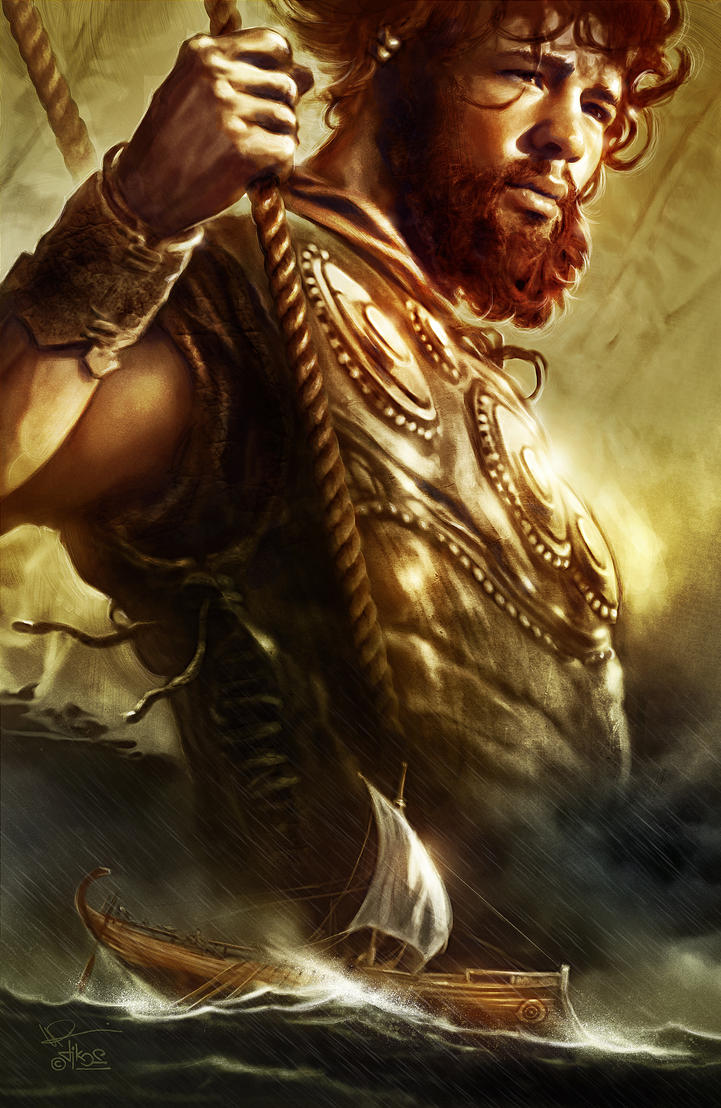
After reading the Odyssey last semester, in class we talked about the necessary qualities of an epic. Since my paper's claim is that The Phantom Tollbooth follows the traditional "Hero's Journey" model, I will need to answer this question: "What makes Milo's journey a Hero's Journey? Does he have everything it takes to measure up to Odysseus, Aeneas and Gilgamesh from the great epic journeys of literature?"